
By mid-afternoon on the Plaines d'Abraham the blocks have stopped being blocks. A carver works a face taller than he is down towards something with ribs, using a hand saw and then the flat of his glove. The trampled ground underfoot looks like spilled sugar, and a Sweden-badged jacket is arguing with a ladder. Nothing is finished, which is exactly when you want to be standing there.
The carving field is the reason to come
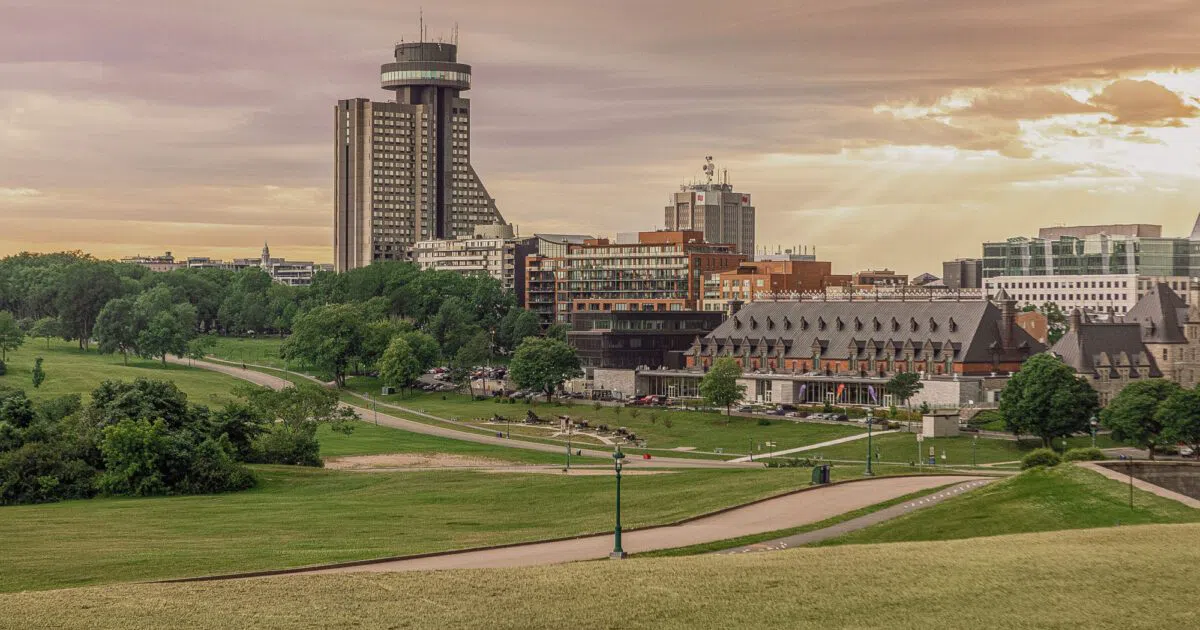
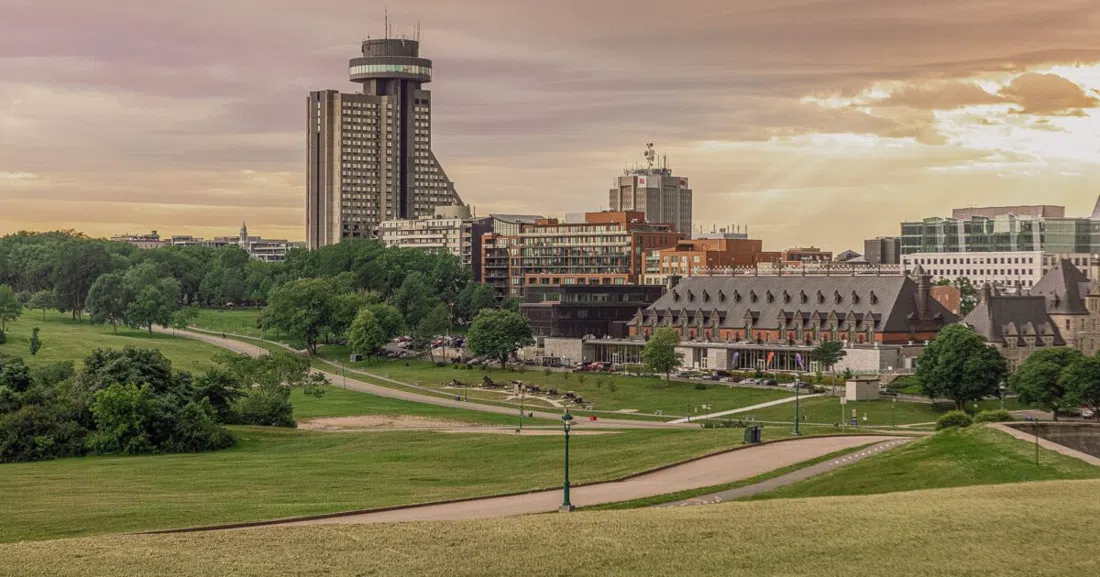
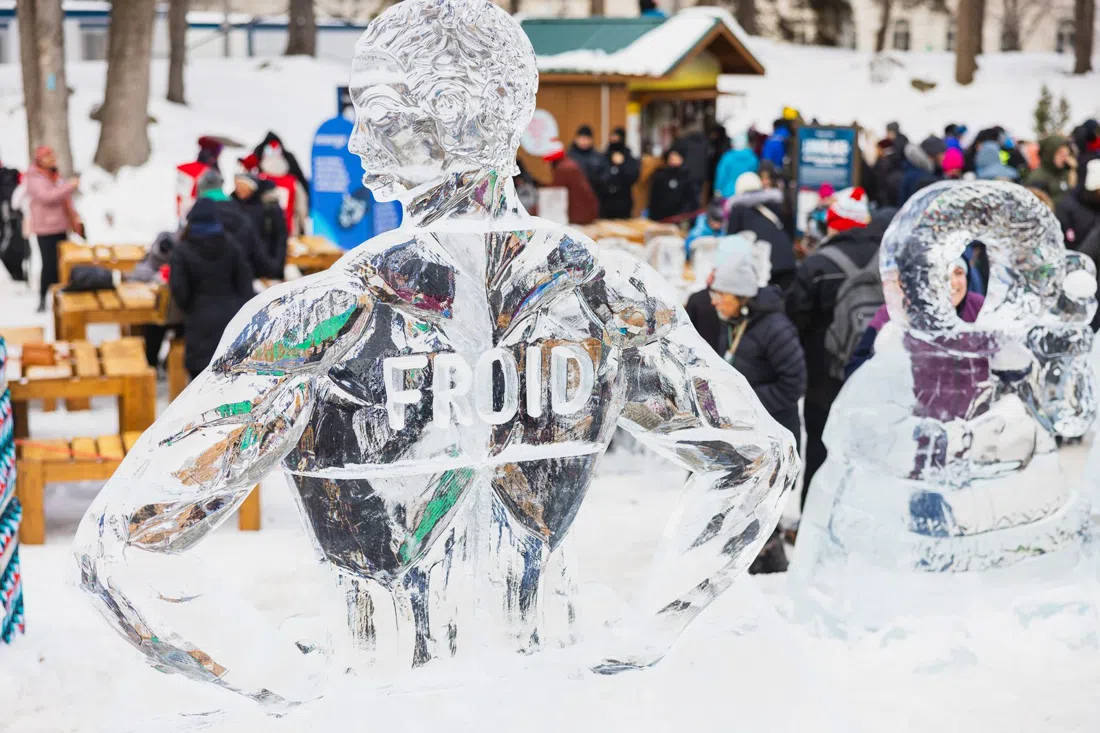
Start at the Plaines d'Abraham — Site des grands événements (Battlefields Park, the long open plateau at the western edge of the upper town). This is where the International Snow Sculpture Competition is staged, and in 2026 it ran for a 41st consecutive year, with teams from China, Spain, Estonia, France, Iran, Sweden and Czechia carving alongside the Canadian and Québec divisions. Same block, same tools, same days, three divisions each carving for its own pride. That rivalry is the one thing here no other city can stage.
Walking in is free. The Plains are a public park, with no door policy and no pass check on the competition field, so a family, a couple or a coachload of forty can arrive at the same gate and the site takes all of them. Carnaval also runs guided group visits for schools and coaches, worth arranging if you are bringing a bus rather than a household.
Go mid-carve, not after. Check the festival schedule and pick a working day rather than the last one. A finished field is a quiet sculpture garden you photograph in four minutes. A working field gives you scaffolding, chainsaw noise, a Czech carver on a stepladder cutting a hollow he clearly does not trust, and teams openly sizing up each other's overhangs. Late afternoon is the best light and the coldest hour, in that order.
From Porte Saint-Louis it is a five-minute walk along Grande Allée to the eastern end of the field. Wear boots with a tread: the crowds polish the paths to glass.
A museum and a fortress on the edge of the field
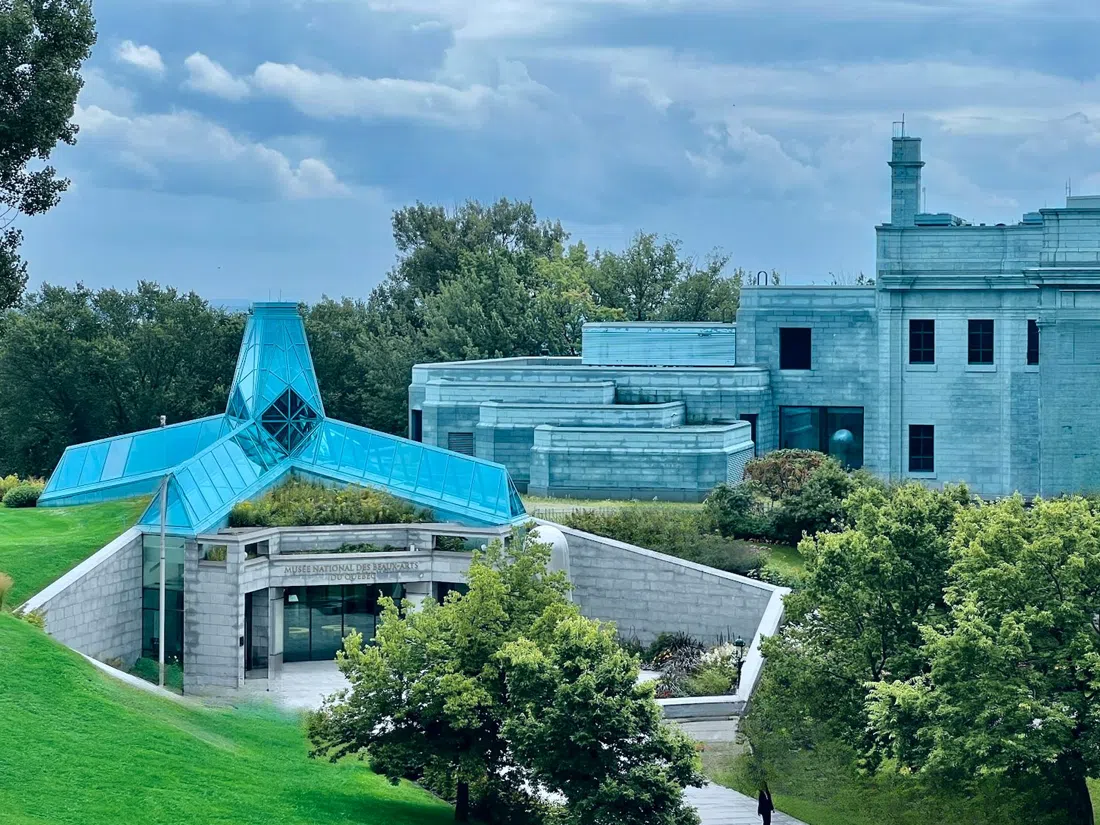
The Musée national des beaux-arts du Québec (MNBAQ, Grande Allée, directly on the Plains) is the warm-up between carving rounds, and its large cloakroom is a real advantage in February when everyone is wearing three layers they need somewhere to put. Admission is moderate for adults, free for Québec residents aged 19 and under and for First Nations, Inuit and Métis visitors. Go for the Inuit collection, not just the heating: it shows how sculpture is read in this part of the world, which changes what you see when you walk back out onto the snow.
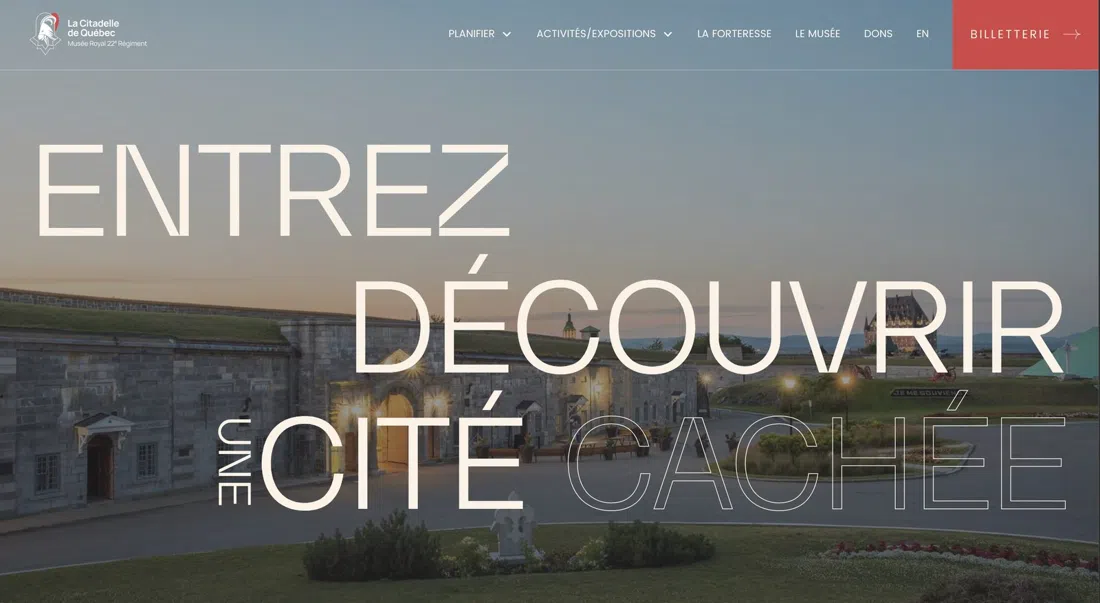
Above the field, the Citadelle de Québec (Cap Diamant, the star-shaped fort at the top of the upper town) is an active military installation, so you can only go in with a guide. That means booking, in French or English, and it is easy enough to arrange for a group. The moderate guided-tour ticket includes the Royal 22e Régiment Museum. During the Carnaval the ramparts also host ticketed evening activities, worth knowing because those walls look straight down on the ground where the teams are carving.
Bonhomme's palace and the pass that gets you into it
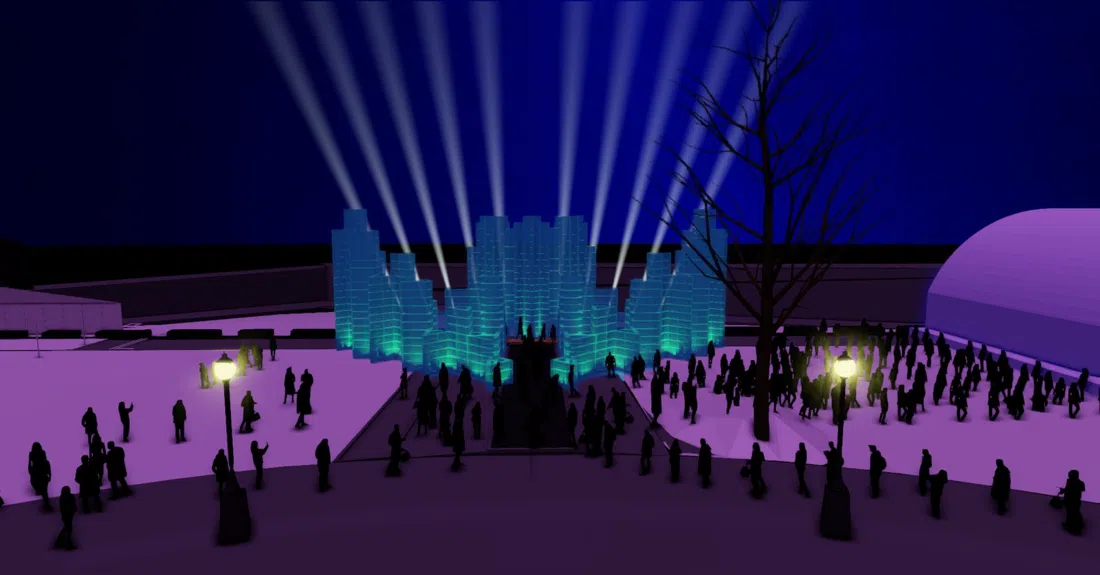
The Palais de Bonhomme (Zone Loto-Québec, Place de l'Assemblée-Nationale, beside the parliament) has been the mascot's seat since 1955, and it is the structure that shows you the festival's scale. The 2026 palace took 395 tonnes of water frozen into shape and 17 days of building at −10 to −15 °C, with each chamber staging a Québec legend. Warm weather ruins ice, so the crew builds to the thermometer rather than the calendar.
The enclosed Carnaval zones need the Effigie. The pass costs CA$29 early-bird or CA$39 plus tax, everyone aged 12 and over needs their own, and it covers those zones rather than the free competition field. Buy before you arrive: the queue at the zone entrance on a Saturday afternoon is the single most avoidable thirty minutes of the trip. The palace is built for crowds and handles groups without fuss, so the only real constraint is passes in hands before the gate.
Put a chisel in your own hands at the Parc de la Francophonie
For the close-range version, go to the Jardin des sculptures Banque Scotia (Parc de la Francophonie, in the dip below the parliament, Saint-Jean-Baptiste side). The International is monumental and competitive; this is small, playful and close enough to touch, and the ice-carving workshops hand you a chisel and a block of your own. It is a compact site that takes groups easily, and the evening DJ sets make it the natural meeting point once everyone has scattered. The same Effigie gets you in.
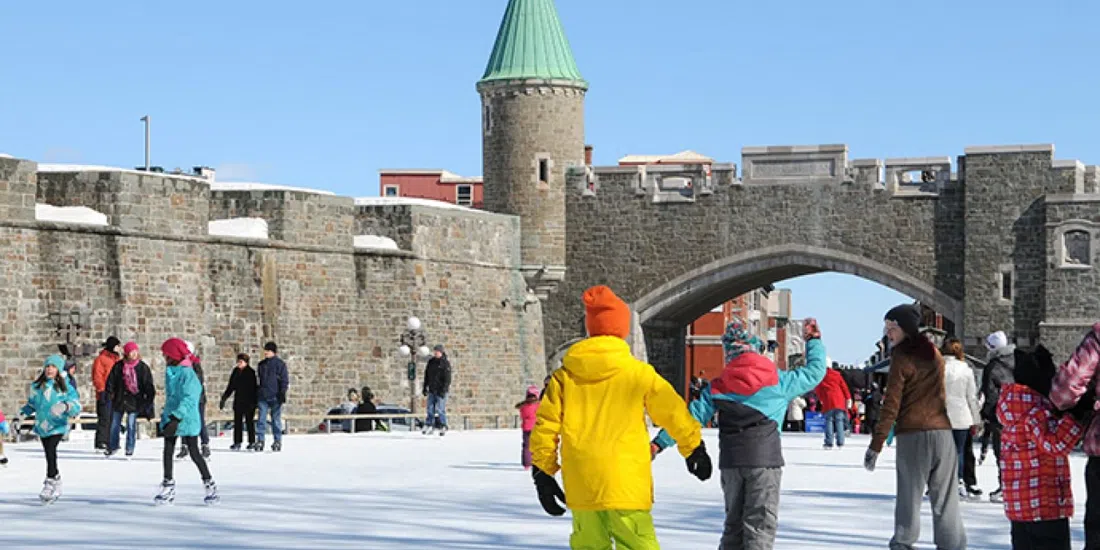
Two minutes away, the Patinoire de la Place D'Youville (just outside Porte Saint-Jean, between the palace zone and the old town) is free, unbooked and refrigerated, so it holds ice from mid-November to mid-March regardless of a thaw. No hockey is allowed, so a group of mixed ability and mixed nerve can all get on it safely. Skate rental runs about CA$8. It is the cheapest good hour in the city, and it sits exactly where you will already be walking.
Height, speed and the view from outside
Au 1884 — Glissades de la Terrasse Dufferin (Terrasse Dufferin, upper town) has been running toboggan slides since 1884 and still sends four people down a wooden chute at roughly 70 km/h. No reservation, just walk up; about CA$5 a ride, about CA$18 for a family of four. Four to a sled means a group splits into crews and races itself, which is the point. The 2026-27 season opens on 4 December, two minutes on foot from the Carnaval's upper-town zones.
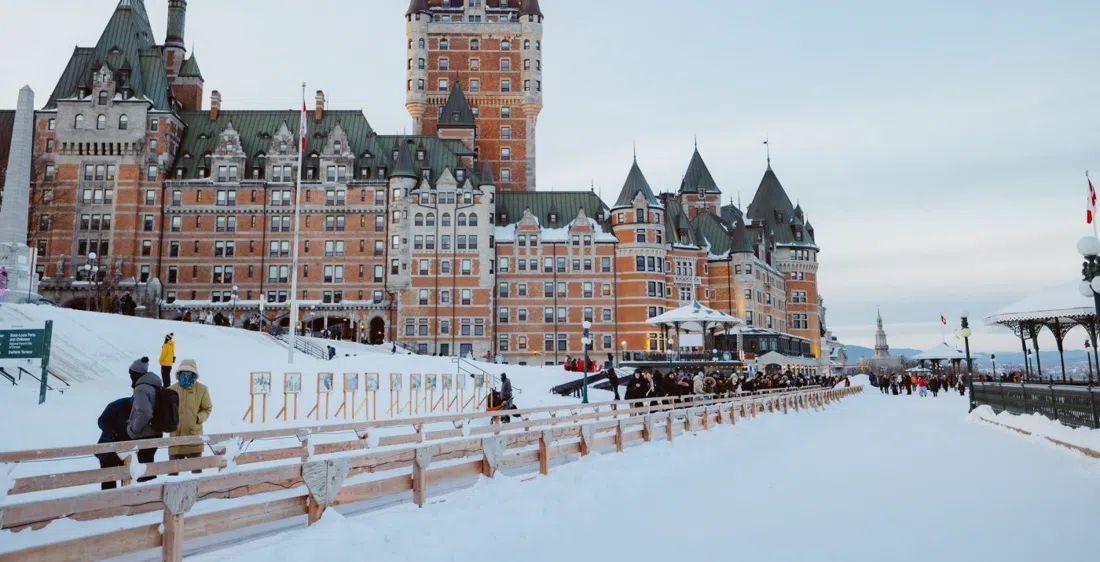
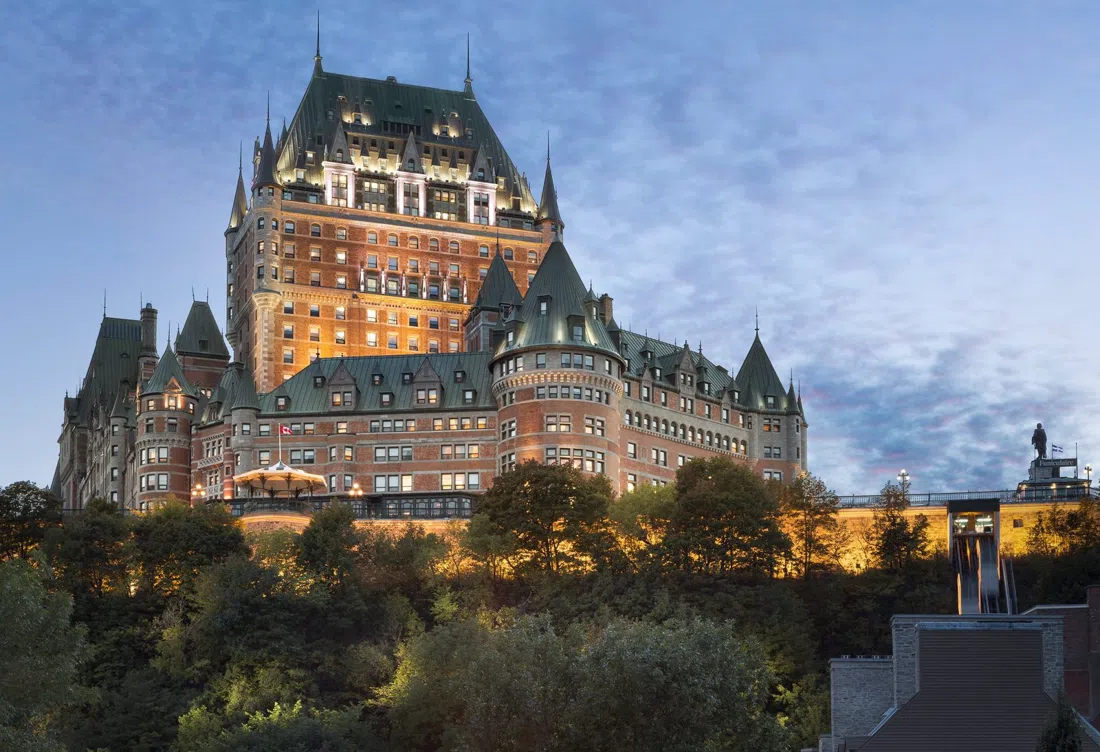
Behind it stands the Fairmont Le Château Frontenac (Terrasse Dufferin, upper town), free to walk past and photograph and, new for 2026 and now a returning Carnaval fixture, somewhere you can go over the side of. The 160-foot rappel down the hotel face is run with Aventurex on timed, capacity-limited slots, so book well ahead: the hotel takes group bookings for rooms, but the abseil fills slot by slot. It is the only way to see the festival's rooftops from outside the building rather than through a window.
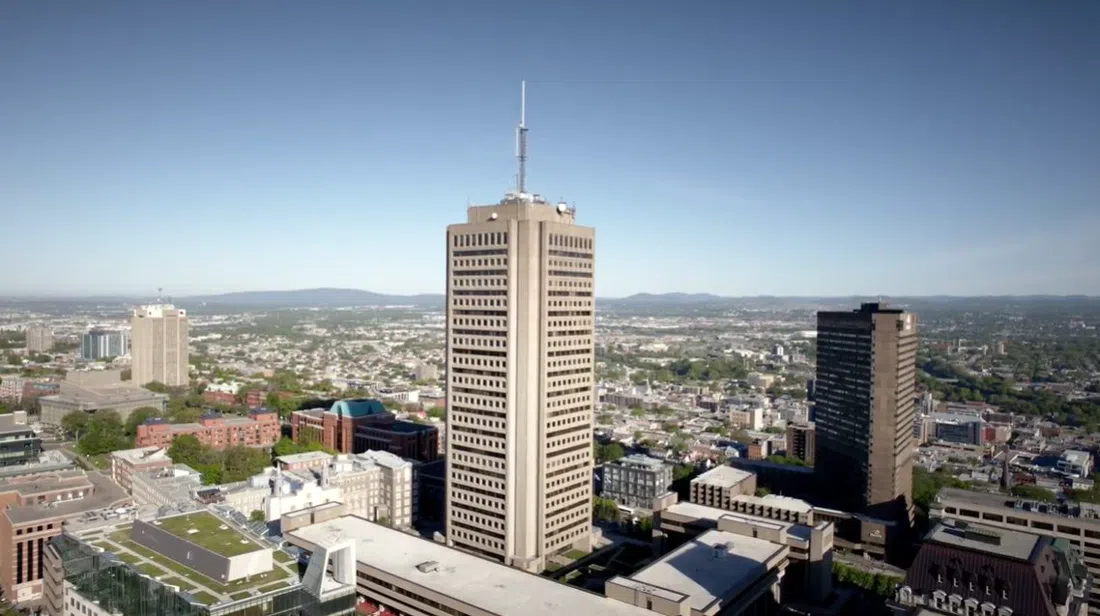
For the geography, take the lift at the Observatoire de la Capitale (Édifice Marie-Guyart, Saint-Jean-Baptiste, a few minutes up from the parliament). About CA$11 for adults, under-11s free. From up there you see the Plains competition field and Bonhomme's palace in one sweep, which no ground-level photograph can give you, and the gallery is heated, so it doubles as a warm-up stop. It is small, though: a large group should split or book a slot rather than arrive together.
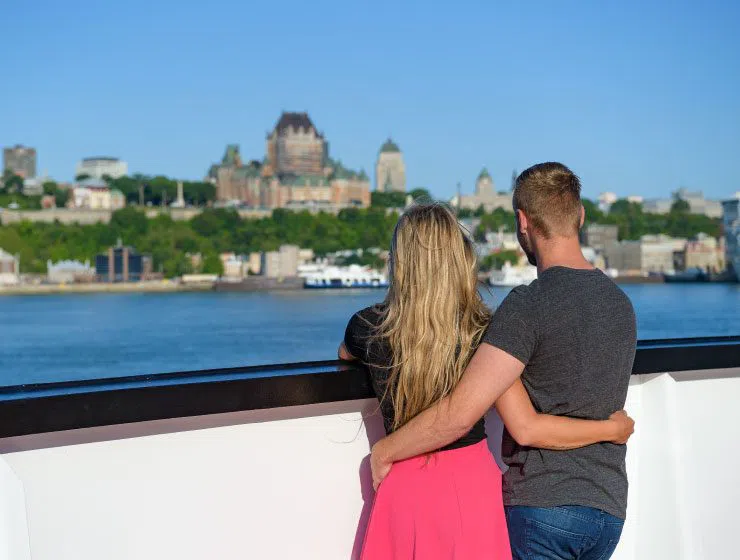
The other view costs about CA$4. The Traverse Québec–Lévis (terminal in the lower town, a short walk from Place Royale) is public transport, not an excursion: no booking, groups simply board, sailings every 20 to 30 minutes through the day. Ten minutes each way through actual ice floes, with the winter city stacked up behind you on the cliff. Carnaval sells a VIP ice-canoe-race viewing experience aboard these ferries. Severe storms can suspend sailings altogether, so keep that afternoon flexible rather than fixed.
Ice the Carnaval does not run
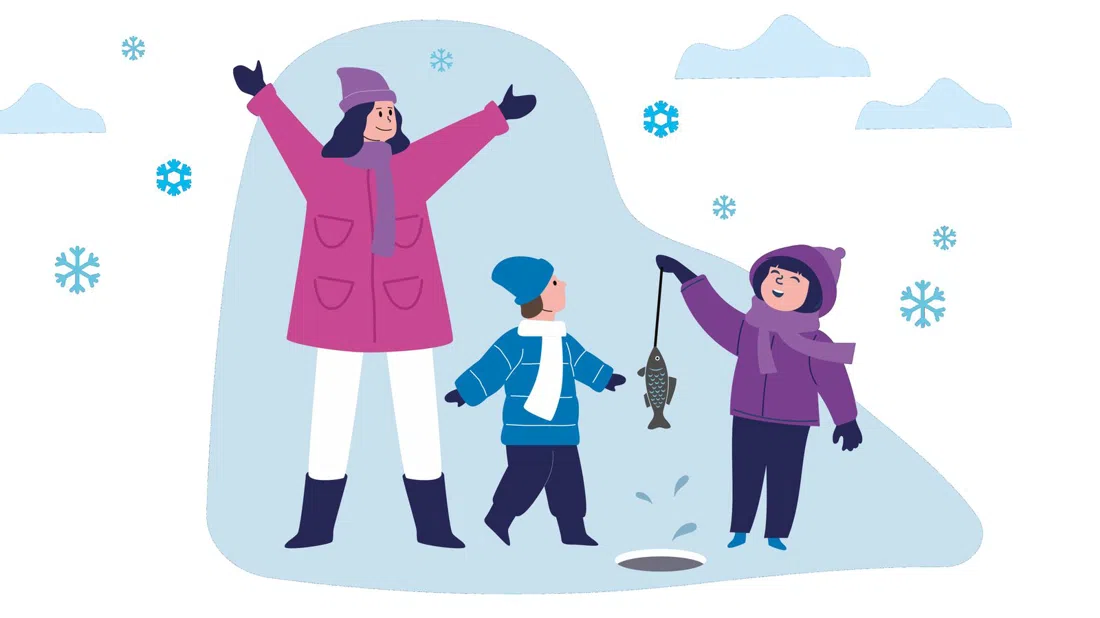
Two of the best cold-weather things here are not Carnaval at all. The Village Nordik du Port de Québec (Vieux-Port, on the water by the Bassin Louise) reached its tenth edition in 2026 and runs from late January to early March under a separate operator. Site access is free; fishing huts and activity packages cost extra, in the middle price band. It rents huts to groups and runs organised tournaments, so reserve ahead for weekends. Take the ice-canoe initiation: an hour of shoving a canoe across floes yourself is what makes the professional race, watched later from the Port's quays, comprehensible rather than baffling.
The Hôtel de Glace (35 km north of the city) is North America's only ice hotel, confirmed for 4 January to 13 March 2027, which overlaps the Carnaval window exactly. Day-visit tour tickets are modest; overnight suite packages are firmly premium, and an overnight means a sleeping bag at a few degrees below freezing, not a hotel room. Most groups arrive by shuttle or coach, and there is a dedicated group quote form. The 2027 edition is built with Tourisme Wendake and Indigenous Tourism Québec, which gives it more substance than the novelty suggests.

The Wendake counterweight
The Carnaval is not the only story this land tells. Onhwa' Lumina (Wendake, the Huron-Wendat community fifteen minutes from downtown) is a night light walk of Huron-Wendat storytelling, told by the Nation itself. It runs 6 January to 27 March 2027, covering the whole Carnaval period, with timed departures Wednesday to Saturday, and groups must book a slot. Mid price band per adult, and the adjoining Hôtel-Musée handles coach groups, group dining and combined hotel-and-walk packages. Go on a night you are not also trying to do the Plains; it deserves its own evening.
Thawing out properly
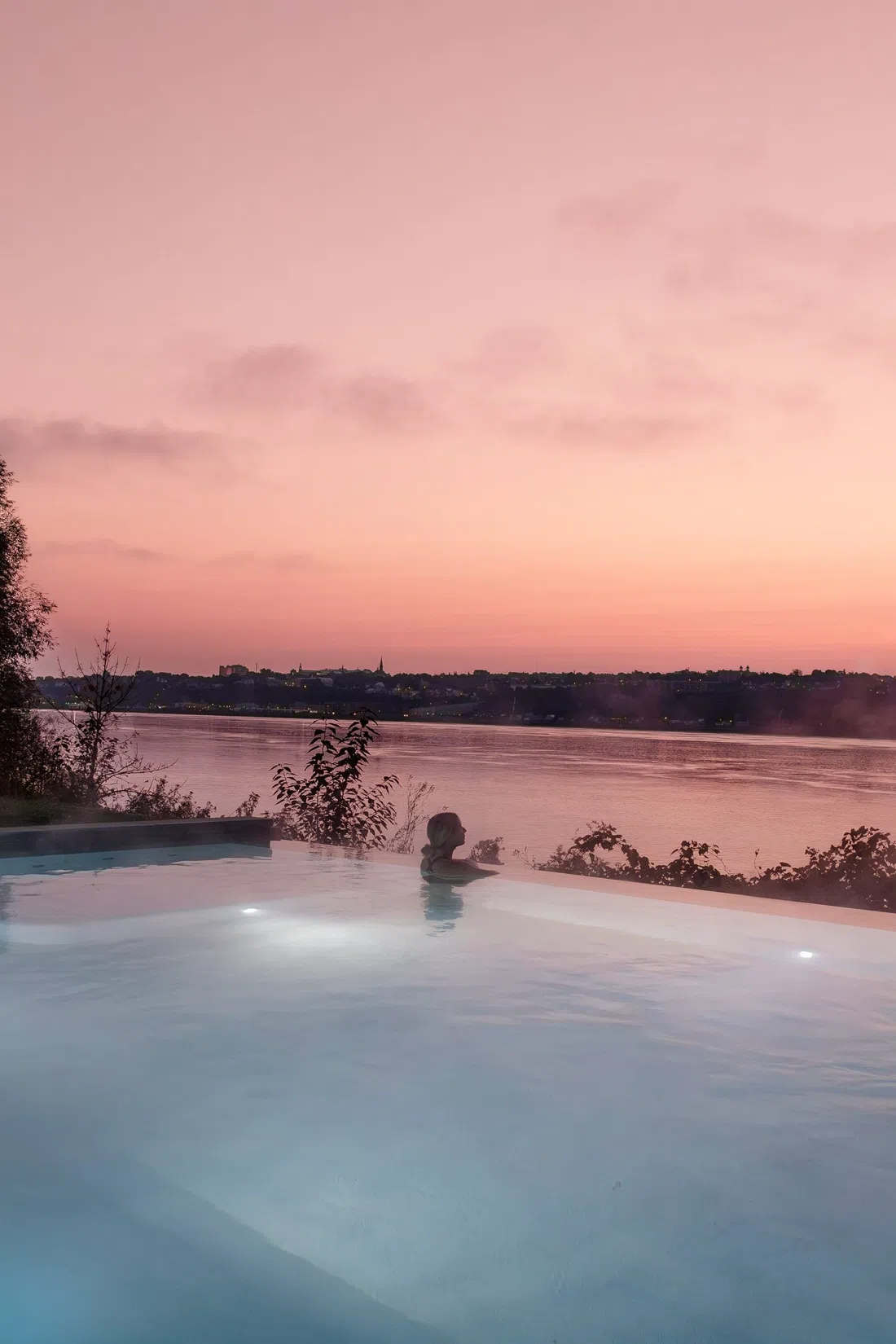
After a day standing still in −20 °C, Strøm spa nordique Vieux-Québec (on the Saint-Charles riverbank, near the Vieux-Port) is the local answer: a hot-cold thermal cycle that resets your hands and feet in about an hour. It is premium, thermal experience per person with treatments on top, and it is silence-oriented. Book ahead. The quiet-zone policy suits a couple or a small group, not eight people catching up loudly. Being on the riverbank rather than out in the suburbs is what justifies the price.
For the other kind of recovery, Noctem Artisans Brasseurs (Saint-Roch, down the hill from the old town) brews hazy IPAs, fruited sours and lagers on site and serves a full kitchen menu until 1 a.m. from Thursday to Saturday. Walk-in friendly with long tables; call ahead for a larger party. After a day of caribou cocktails at the Carnaval ice bars, this is the city's actual beer scene rather than the tourist strip's version of it.

Fifteen minutes east for the frozen falls
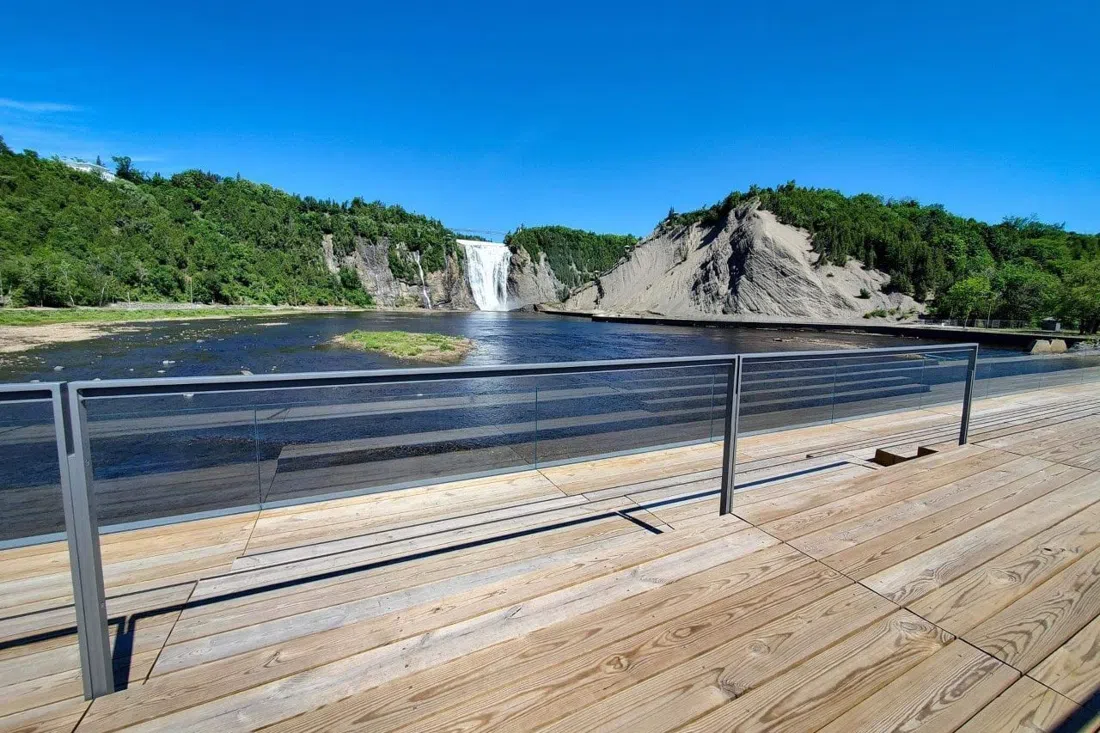
Parc de la Chute-Montmorency (Beauport, fifteen minutes east of downtown) is the region's best frozen spectacle, and the Sépaq site has coach parking, group rates and a cable car that moves large numbers quickly. Costs are a parking fee plus a cable-car ticket, with the grounds otherwise low cost. One clear warning: in winter the Promenade de la Chute, the panoramic staircase and the Sugarloaf itself are closed for safety. Plan on the cable car and the upper viewpoints and you will have a good two hours; plan on walking the bridge and stairs and you will have a wasted morning.
Planning the cold days
Base yourself in or just outside the walls of the upper town and almost everything above is on foot in under twenty minutes: the Plains, the palace, the sculpture garden, the toboggan slides, the rink, the Observatoire. Check the Quebec hotel search for what is inside that radius, and the wider Quebec guide for context beyond the festival. Montmorency, Wendake and the ice hotel are the three that need a bus, shuttle or car.
Budget, roughly: the competition field, the rink and the Plains cost nothing; the Effigie is CA$29 early-bird or CA$39 plus tax; the ferry about CA$4 each way; the Observatoire about CA$11; a toboggan ride about CA$5. Cards work everywhere, but carry a little cash for skate rental and food stalls, and Canadian sales taxes are added at the till rather than shown on the shelf. Tipping around 15 to 20 percent is normal in bars and restaurants.
February here means −10 °C on a mild day and −25 °C with wind on a bad one. Dress for standing still, not walking: insulated boots, a proper hat, two pairs of gloves so one can dry. Build the day around indoor pauses (the MNBAQ cloakroom, the Observatoire gallery, a long table at Noctem) and plan roughly two hours outdoors at a stretch. Book the Effigie, the abseil slot, the Wendake walk and the spa before you travel; leave the ferry, the rink and the slides for whatever the weather allows.